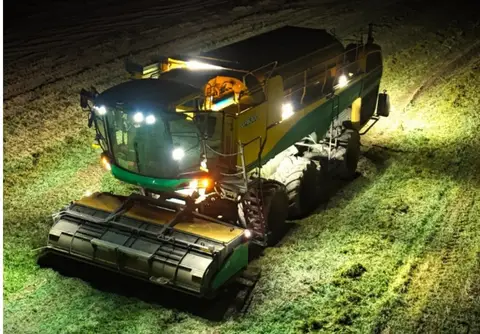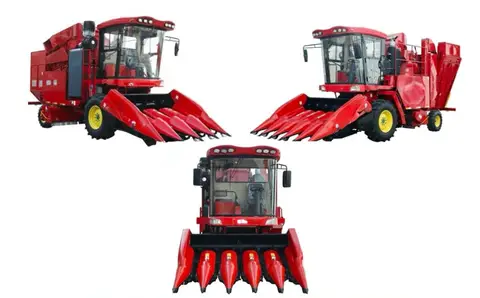
Beans give a good margin, but it is easy to lose a noticeable part of the crop at harvest. The pods sit low, they shatter on impact, and the seed splits under harsh threshing. So the harvesting method and the machinery are chosen for the variety, the field and the weather — not the other way round.
Method one: direct combining
The beans are cut and threshed in a single pass. This is done with headers that have a flexible cutter bar, which follows the ground and cuts the plant as low as possible.
The method works when several conditions come together: an upright variety with the lowest pods set high, a level field without stones, and even ripening. The advantage is obvious — one pass and a minimum of machinery. The risk is just as clear: everything growing below the cutting line stays in the field, and over-dried pods open while still on the header.
Method two: two-stage harvesting
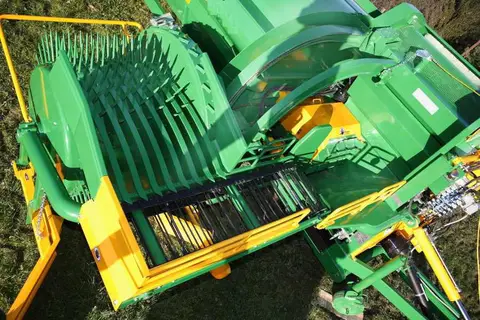
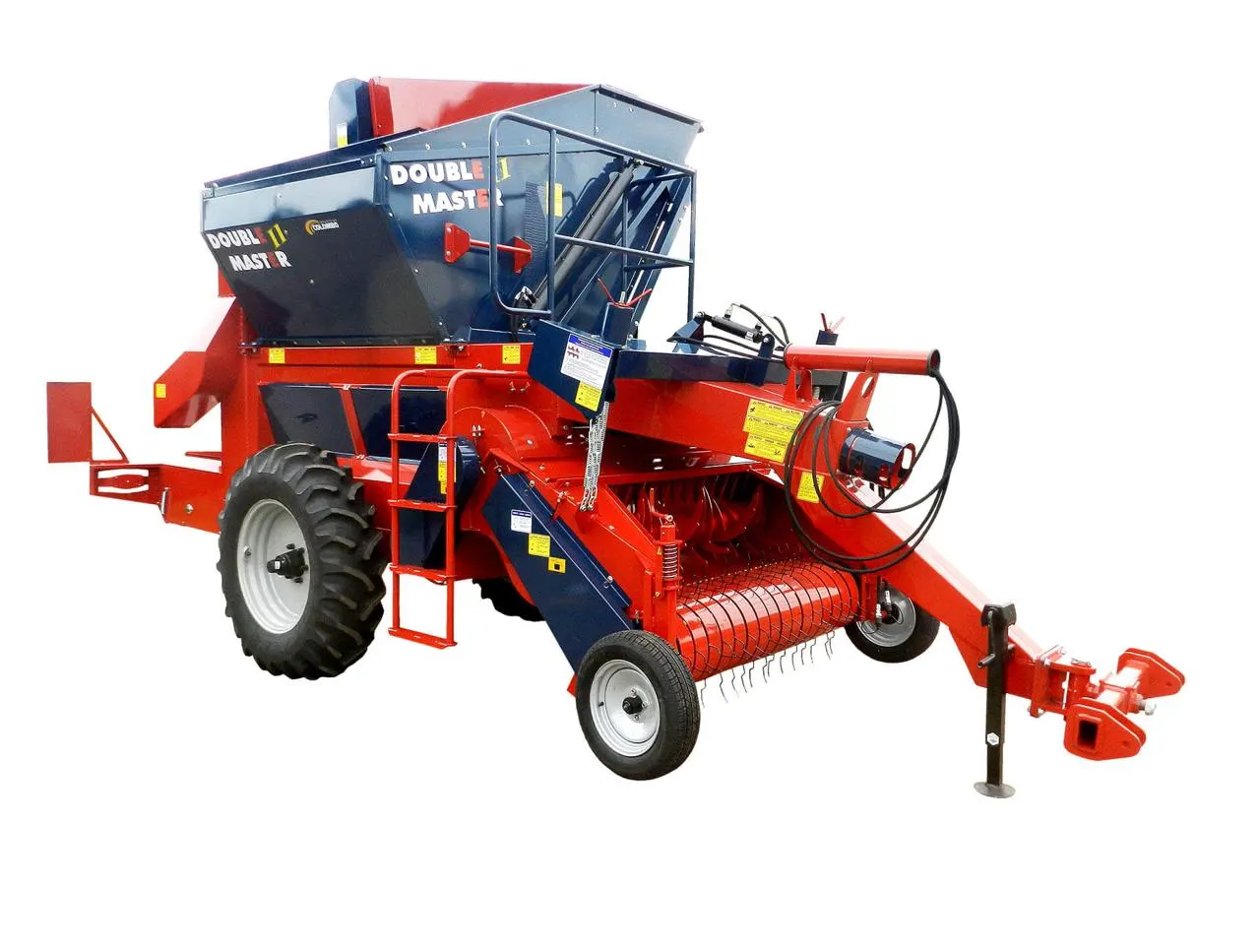
Here the work is split into two steps. First the plants are undercut or pulled and laid in a windrow. In the windrow the crop dries and evens out in moisture. Then a bean harvester with a pick-up — trailed or mounted — collects the windrow and threshes the seed in a gentle mode.
The two-stage method works better with vining varieties, on uneven fields and where ripening is drawn out. Losses are lower and the seed stays whole. The price is two passes and dependence on the weather while the crop lies in the windrow.
What is different about threshing beans
The main enemy of marketable beans is split and cracked seed. Specialised bean harvesters deal with this by design: low drum speed, gentle feeding, and seed handling by elevators without sharp impacts. The larger the seed and the lower its moisture, the more this gentleness matters.
For small lots and seed plots, stationary threshers with cleaning and bagging are used: the crop is brought to the machine and clean seed comes out straight away.
What else you will need
- A header or an undercutter — for the chosen method and row spacing.
- A harvester or a thresher — a trailed version works with the farm’s own tractor and costs less than a self-propelled machine.
- Seed logistics — trailers that unload into big bags or self-unloading trailers save time at the edge of the field.
How to choose
Start with the variety and the field. If the plant is upright, the field is level and the area is large, consider direct combining with a flexible header. If the variety is vining or the field is difficult, the two-stage method with a trailed bean harvester will be more reliable. In doubtful cases it is useful to calculate both options: the cost of the machinery against the cost of the seed that would stay in the field.