Sweet corn is harvested quite differently from grain corn. The ear is picked at the milk stage, when the kernels are juicy and sweet, and the value lies in the whole ear rather than in threshed grain. Hence a separate class of machinery.
Why not a grain combine
A grain combine is built for dry, hard grain: it snaps the ear, threshes it and cleans the grain with air and sieves. For sweet corn that means losing the product — the juicy kernels would simply be crushed.
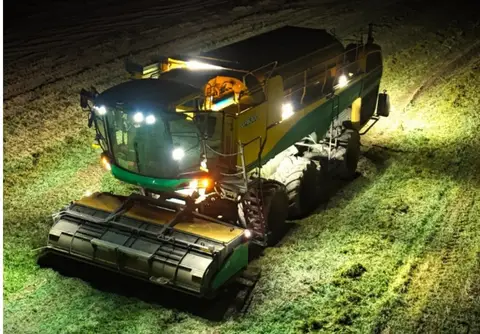
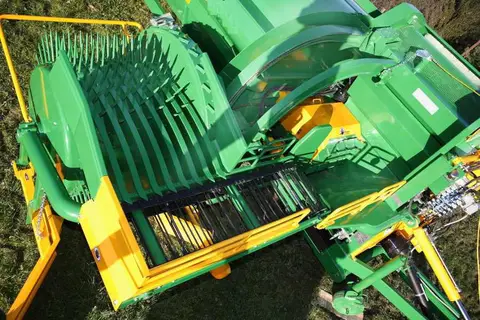
A sweet corn harvester works differently. It gently separates the ears from the stalk and conveys them into a hopper or into a vehicle alongside, without threshing. The working parts are chosen so as not to bruise the ear or damage the kernels: both the appearance and the yield at the plant depend on this.
Seed corn is harvested in the same way, on the ear, to preserve the germination of the seed. That is why some machines are designed for both crops.
Fresh market and processing: different requirements
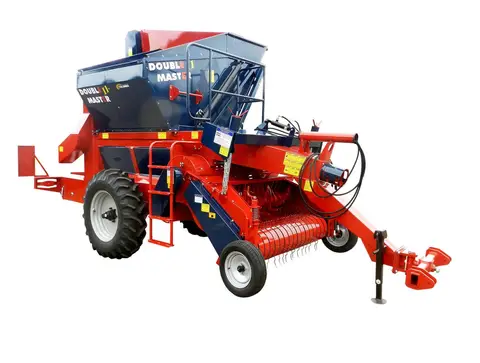
For the fresh market the look of the ear matters. It is harvested in the husk, which protects the kernels and extends shelf life. Capacity is not the main thing here: it is more important that the ears are whole and clean. For small areas, trailed single-row machines working with a tractor are suitable.
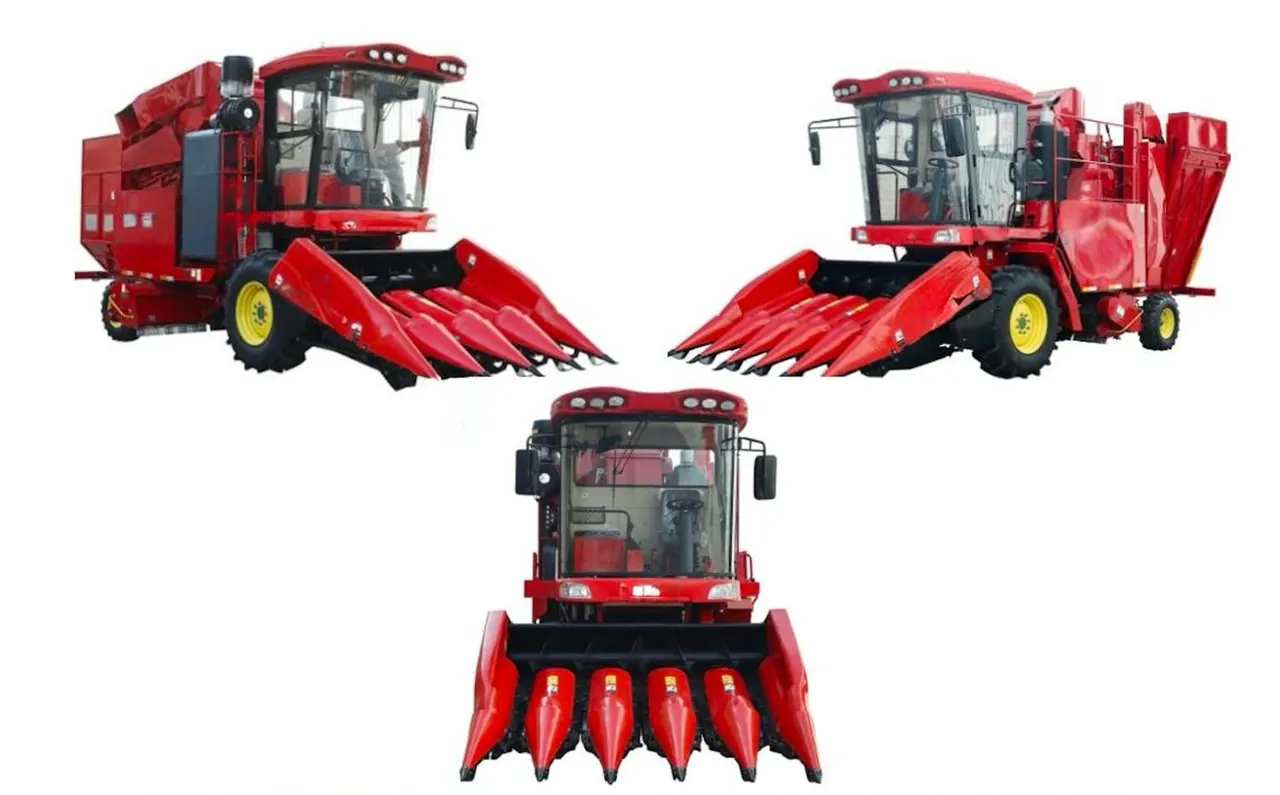
For processing — canning and freezing — capacity and a steady rhythm matter. The plant must receive raw material evenly, so self-propelled multi-row harvesters with a large hopper are used, often around the clock. The husk and stalk remains are removed on the line.
Time from field to plant
After harvest the sugars in the kernels start turning into starch, and the higher the temperature, the faster this happens. So the harvested ears are delivered to processing or cooled as quickly as possible. In practice this means that harvesters, transport and intake at the plant are planned as one system with an hourly schedule.
How to choose a harvester
- Purpose: fresh market, processing or seed production — the type of machine depends on it.
- Area and timing: sweet corn is sown at several dates to stretch the season; harvester capacity is calculated from the largest daily volume.
- Number of rows and row spacing: the header must match the planting layout.
- Hopper or unloading on the move: a hopper is convenient on small fields, unloading into a vehicle alongside — on large ones.
- Distance to the plant: the greater it is, the more important transport and cooling become.
Summary
Sweet corn is a crop where the machinery directly affects product quality. When choosing a harvester, start from where the crop will go and from the daily volume that has to be harvested and delivered. If you plan your own processing, it is better to select the harvester and the line together.