Seed pumpkins are grown for the seed, not the flesh. The fruits stay in the field until fully ripe, then the seed is taken out and the flesh goes back into the soil. Done by hand, this is the most labour-intensive operation in the whole technology, so the harvest is the first thing to be mechanised.
Three harvesting operations
1. Windrowing. The fruits scattered across the field are pushed into rows. This is done with a windrower — a blade mounted on a tractor. It moves the fruits into an even windrow and at the same time pushes the vines aside so that they do not get in the way of the harvester.
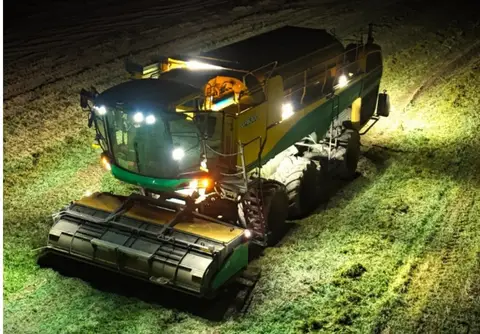
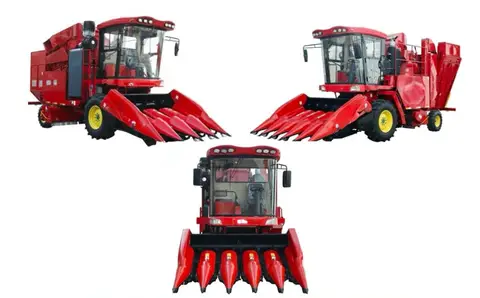
2. Pick-up and crushing. The pumpkin seed harvester travels along the windrow. The fruits enter the machine, where they are crushed.
3. Seed separation. The crushed mass passes through a separator — usually a rotating perforated drum. The seed is separated from the flesh and skin and collected in a hopper, and the rest is spread over the field as organic fertiliser.
Manual feed or automatic pick-up
The machines differ above all in how the fruits get inside.
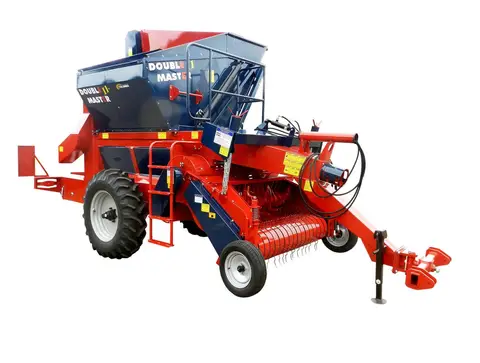
Harvesters with manual feed are simple trailed machines. Workers walk along the windrow and throw the fruits into the receiving hopper. Such a harvester costs less and suits small areas or farms that are just starting with the crop. The limitation is that a crew is needed and capacity depends on people.
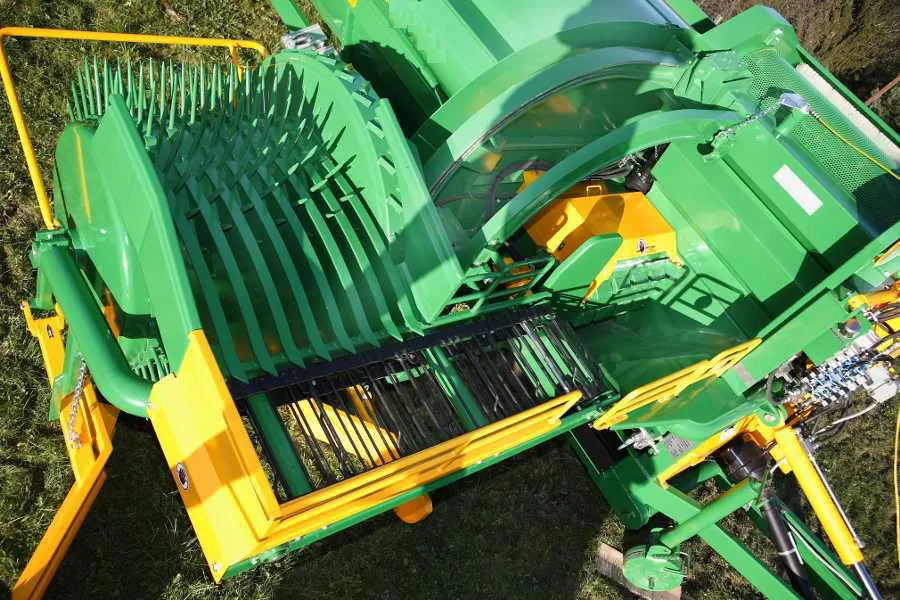
Harvesters with automatic pick-up lift the fruits from the windrow themselves with a spiked wheel and feed them to the crusher. No crew is needed: one tractor driver works with the machine. This is the solution for large areas, where it is important to bring in the crop during a short dry period.
After the field: washing and drying
The harvested seed is wet and covered with remains of flesh, so it cannot be stored as it is. It goes through two more operations.
- Washing removes the slime and remains of flesh. The appearance of the seed depends on it, especially if it is sold as a snack rather than for oil.
- Drying has to start as soon as possible, within a few hours of harvest: wet seed heats up and loses quality. It is dried to a moisture content that is safe for storage — usually below 10%.
The capacity of the washer and the dryer must match the capacity of the harvester. If the dryer cannot keep up, the harvester will have to stop.
How to put the set together
- Area. Up to a few dozen hectares a manual-feed machine is enough; on larger areas automatic pick-up pays back through savings in labour and time.
- Type of pumpkin. Fruit size and skin thickness affect the settings of the crusher and separator.
- Tractor. Trailed harvesters are driven from the power take-off — check that the tractor’s power meets the machine’s requirements.
- The line after the field. Treat the harvester, washer and dryer as one set.
If you plan your own oil production or seed packing, it is better to select the harvesting and processing equipment together, for the same daily volume.