Green peas are one of the most demanding crops to harvest. The window in which the peas have the right tenderness lasts only a few days, and the harvested crop loses quality fast. That is why the machinery is chosen not just for field capacity but for the whole chain: field — transport — plant.
How green peas are harvested
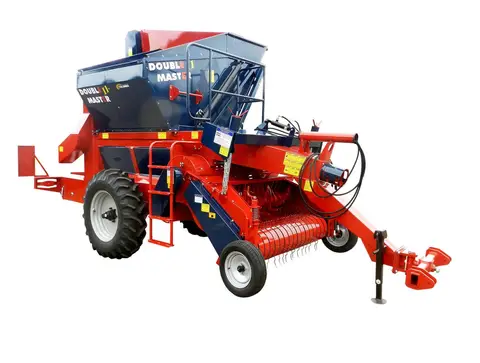
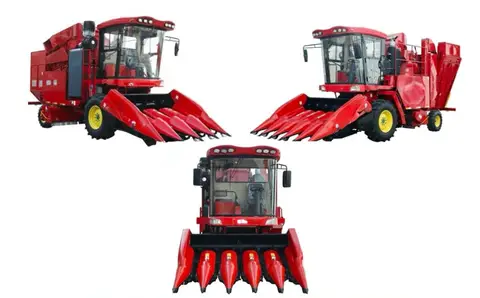
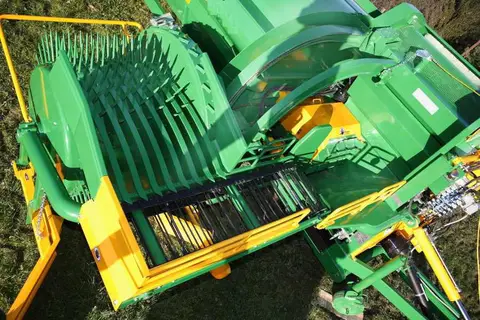
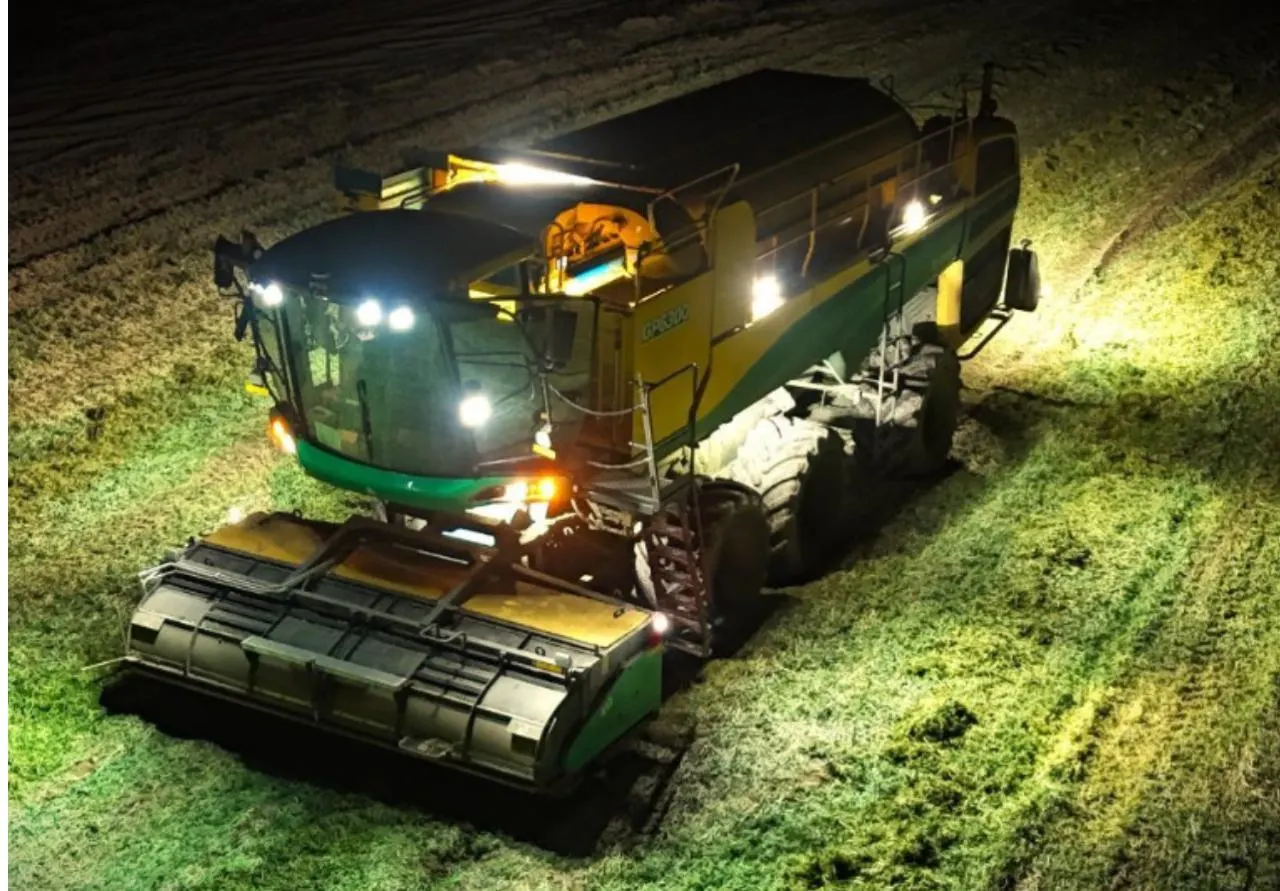
A grain combine is not suited to this job: it is built for dry grain and damages tender peas. Green peas are harvested by specialised self-propelled pea harvesters. The machine strips the pods from the standing plant without cutting it and shells the peas straight away in a rotating drum with beaters. The peas are then cleaned of pods and leaves and collected in a hopper, while the plant residue goes back onto the field.
This approach gives three advantages: minimal manual labour, clean peas at the outlet and the ability to work around the clock once the field is ready.
Why time decides everything
The ripeness of green peas is measured with a tenderometer — an instrument that shows how firm the peas are. The higher the reading, the more starch and the lower the product grade. In hot weather a field can become over-ripe within a day or two, so harvesting is planned by the hour.
After shelling, the peas have to reach processing as quickly as possible: growers usually aim for a few hours from the hopper to blanching or freezing. Hence the main selection rule: the capacity of the harvesters must match the amount of raw material the plant takes in per hour. Extra capacity in the field does not help if the line cannot keep up, and the other way round.
What to look at when choosing
- Capacity and area. Calculated from the sown area, the ripening schedule of the varieties and the number of working hours per day.
- Hopper and unloading. The larger the hopper and the higher the unloading point, the less often the harvester stops and the easier it is to organise transport.
- Work on slopes. A levelling system for the threshing drum keeps shelling quality on uneven fields.
- Cleaning quality. It determines how much foreign material arrives at the plant and how heavily the line is loaded.
- Service and spare parts. In season, a day of downtime can cost the crop from several fields, so the availability of parts and experienced service matters as much as the price of the machine.
New or refurbished
New pea harvesters are a significant investment that pays back on large areas and with stable contracts with a processor. For farms that are just entering the crop or have a small area, a workable option is a machine after a major overhaul: with rebuilt threshing units, hydraulics and running gear. Here it is important to see the list of work carried out and to have a warranty on the key units.
Where to start
Selection starts with three figures: the area under peas, the distance to the plant and its hourly capacity. With these you can calculate the number of harvesters and transport units needed. If you are planning your own processing at the same time, it is worth selecting the field machinery and the line together — then they will work in the same rhythm.