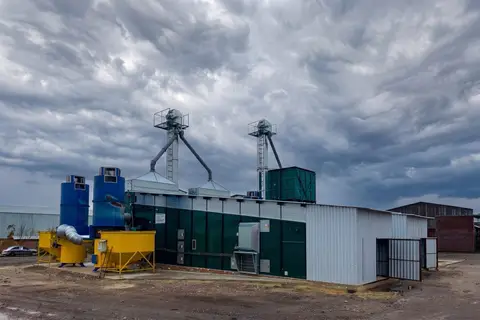
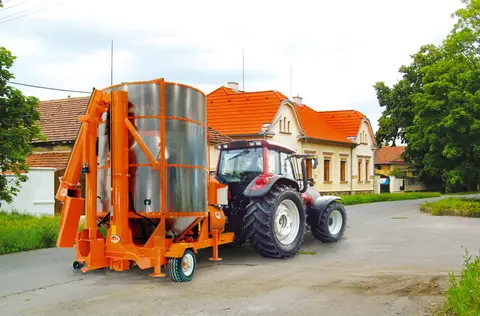
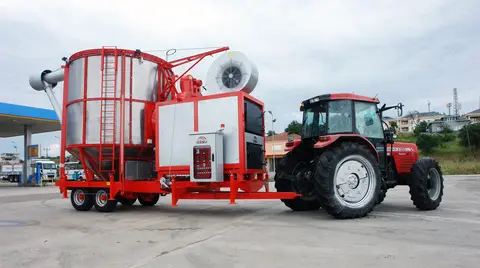
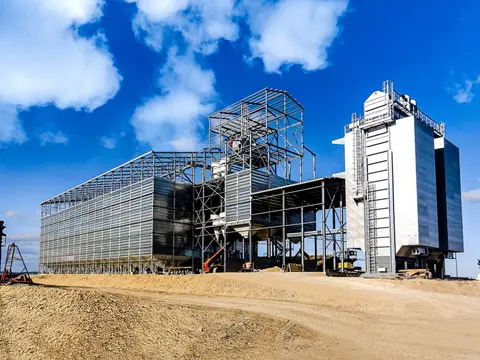
French FAO grain dryers belong to the industrial class: one column dries up to 4,000 t of maize a day, taking the moisture from 28% down to 14%. They differ from farm dryers not only in output but also in a design meant for decades of elevator service.
How an industrial dryer differs from a farm dryer
- Reliability. Components come from leading European manufacturers.
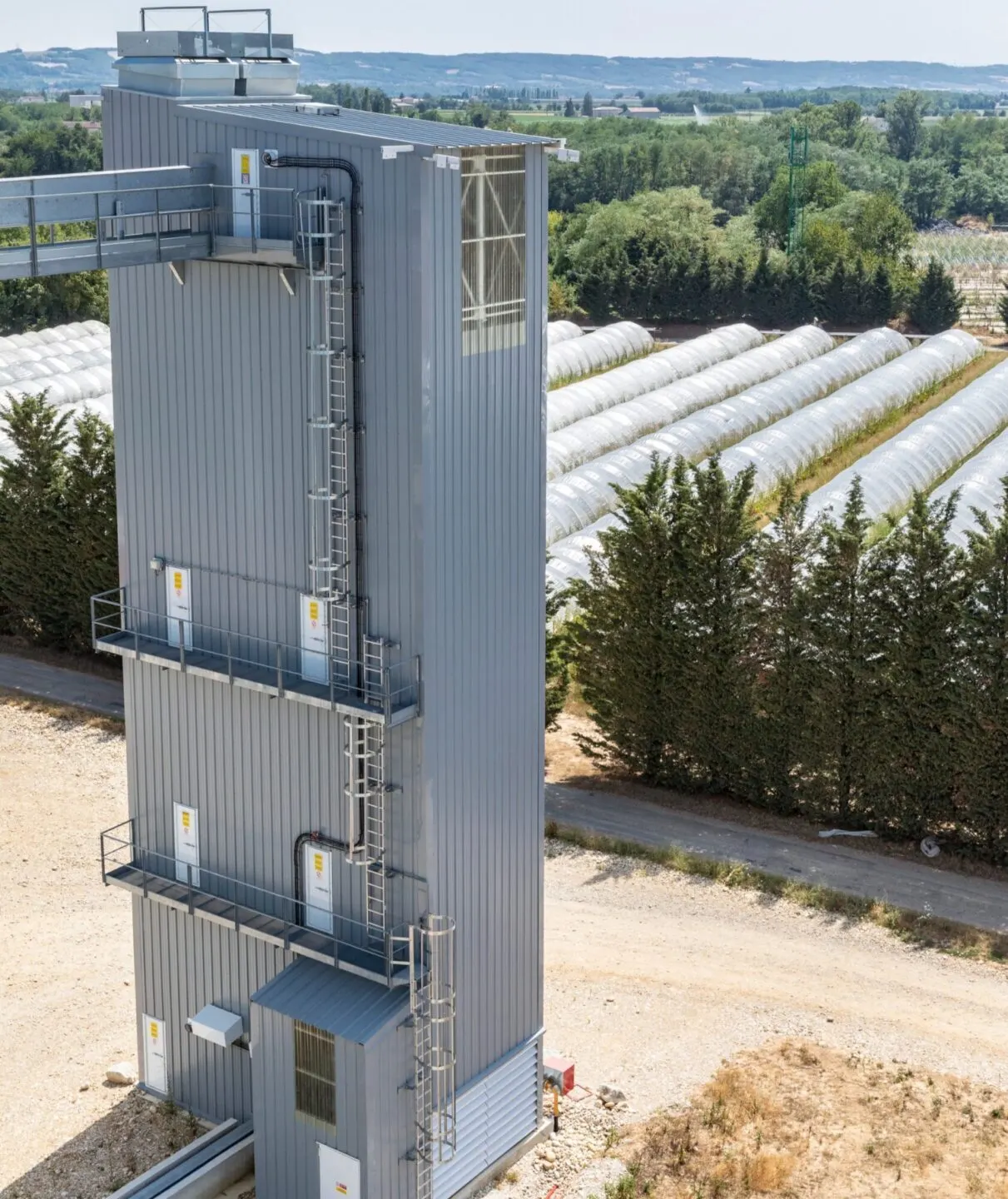
- Easy maintenance. There are ladders and platforms outside and inside the column, and access doors let staff walk in upright.
- A durable casing. A fully clad body and a pitched roof protect the dryer from the weather.
- Fuel economy. In addition to heat recovery there is recirculation of warm air.
- A flexible thermal scheme. The dryer is efficient not only on maize and natural gas but also on other crops and fuels.
- Industrial insulation. Mineral wool 45 mm thick, which matters for maize, soya and other crops dried above 70–80 °C.
- Safety. Temperature sensors are placed to cover the whole exhaust side of the grain column.
Who it is for
FAO dryers are chosen by elevators, grain terminals and large farms with a steady flow of grain. To select one we need the crops, the daily intake, the initial and final moisture and the type of fuel.