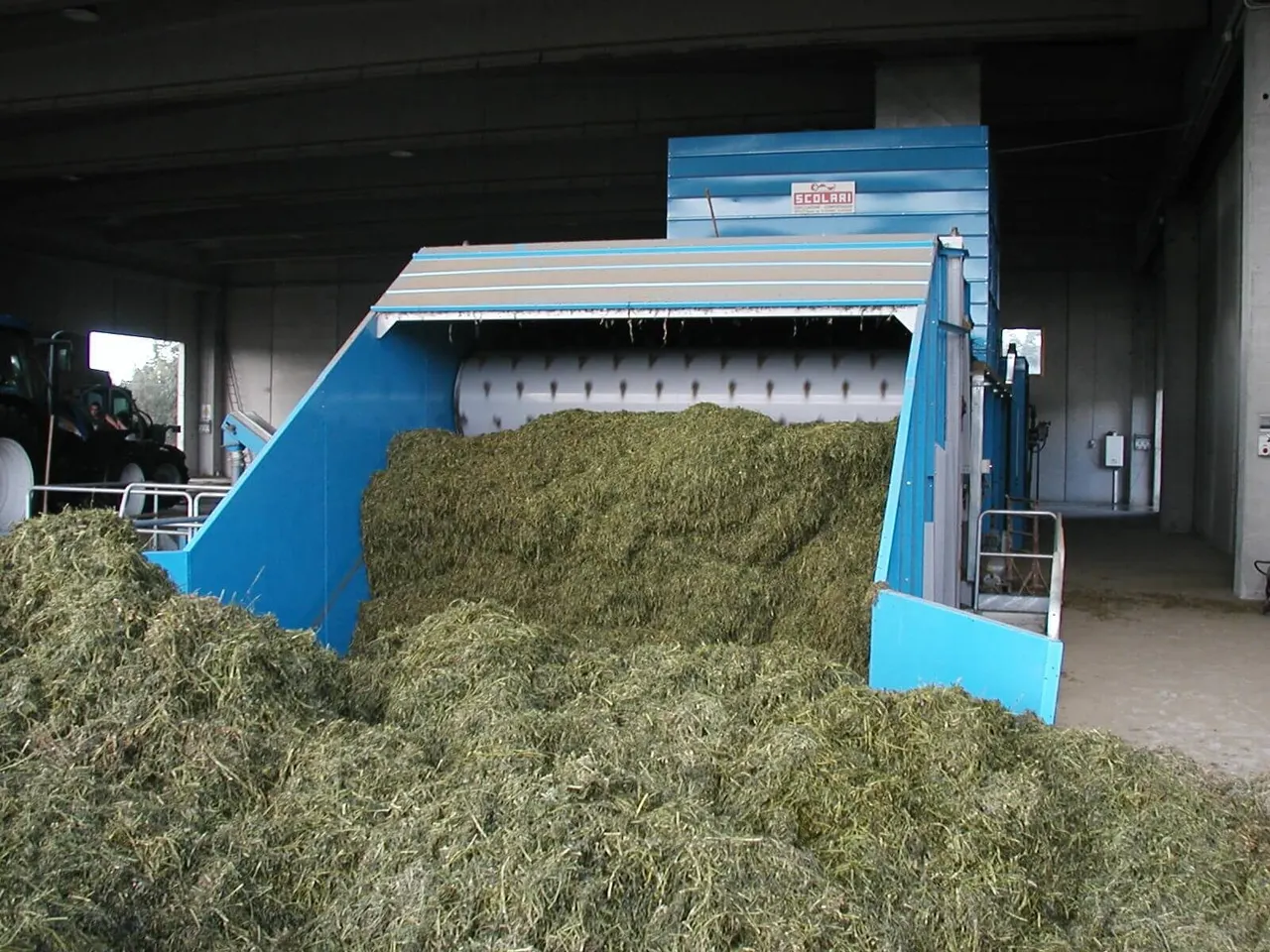
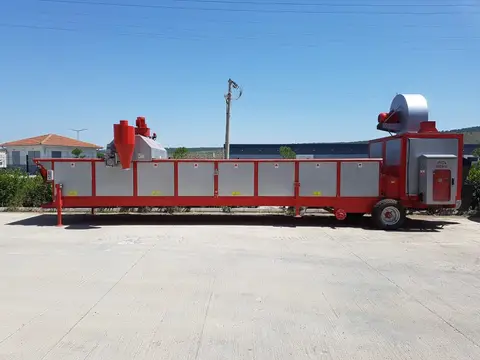
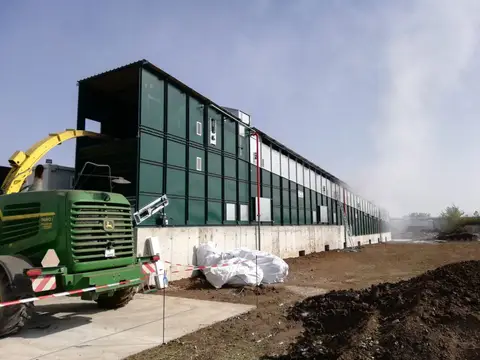
Horizontal dryers with a mechanical turner from the Italian company Scolari are intended for products with a very high moisture content and for materials that must be mixed thoroughly so that the final moisture is as uniform as possible.
The turner
The heart of the dryer is an industrial turner patented by Scolari. It runs on rails back and forth along the drying table and does two jobs: it mixes the product and, on every pass, moves it a little from the loading end towards the discharge end. One motor drives the carriage, the other turns the blades. Travel and rotation speeds are first set for the product, and the control panel then adjusts them automatically.
- Warm air easily reaches the inner layers of the product.
- The final moisture is very uniform.
What they dry
Seed, wet washed grain, cotton seed, hay, straw, oilseeds and cereals, grape pomace and seeds, seaweed, and also sewage sludge and solid waste.
Construction
- A feeding system spreads the material evenly over the table, by an inclined conveyor or through a weighing hopper.
- Parts in contact with the material are stainless steel; where necessary the whole dryer is made of stainless steel.
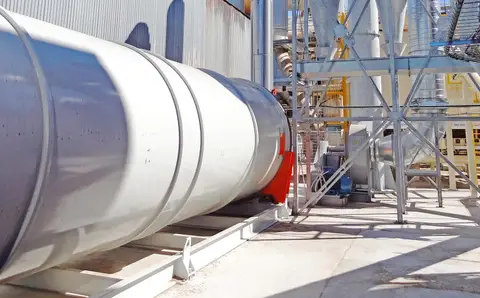
- Dust and odour: cyclones cut dust emission and a scrubber system cuts odour, down to the level set by local regulations.
- A cooling zone can be provided at the end of the table.
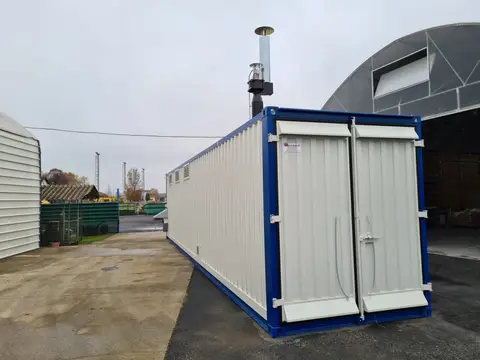
The drying air temperature is from 35 to 140 °C. Any heat source can be used: natural gas or LPG, steam, thermal oil, hot water, or solid fuel (wood chips, pellets, straw, firewood).
Two versions
- A-CK: a single perforated table with a turner. For products dried at no more than 80 °C. A centrifugal fan at the top draws the moist air into the dust suppression system.
- A-CD: two decks, with a conventional moving conveyor above the table with the turner. On the upper deck the material is pre-dried by secondary air that has already passed the lower one, and it then drops to the lower deck. For products dried above 100 °C; according to the manufacturer, heat consumption is as low as 750 kcal per kg of water evaporated.