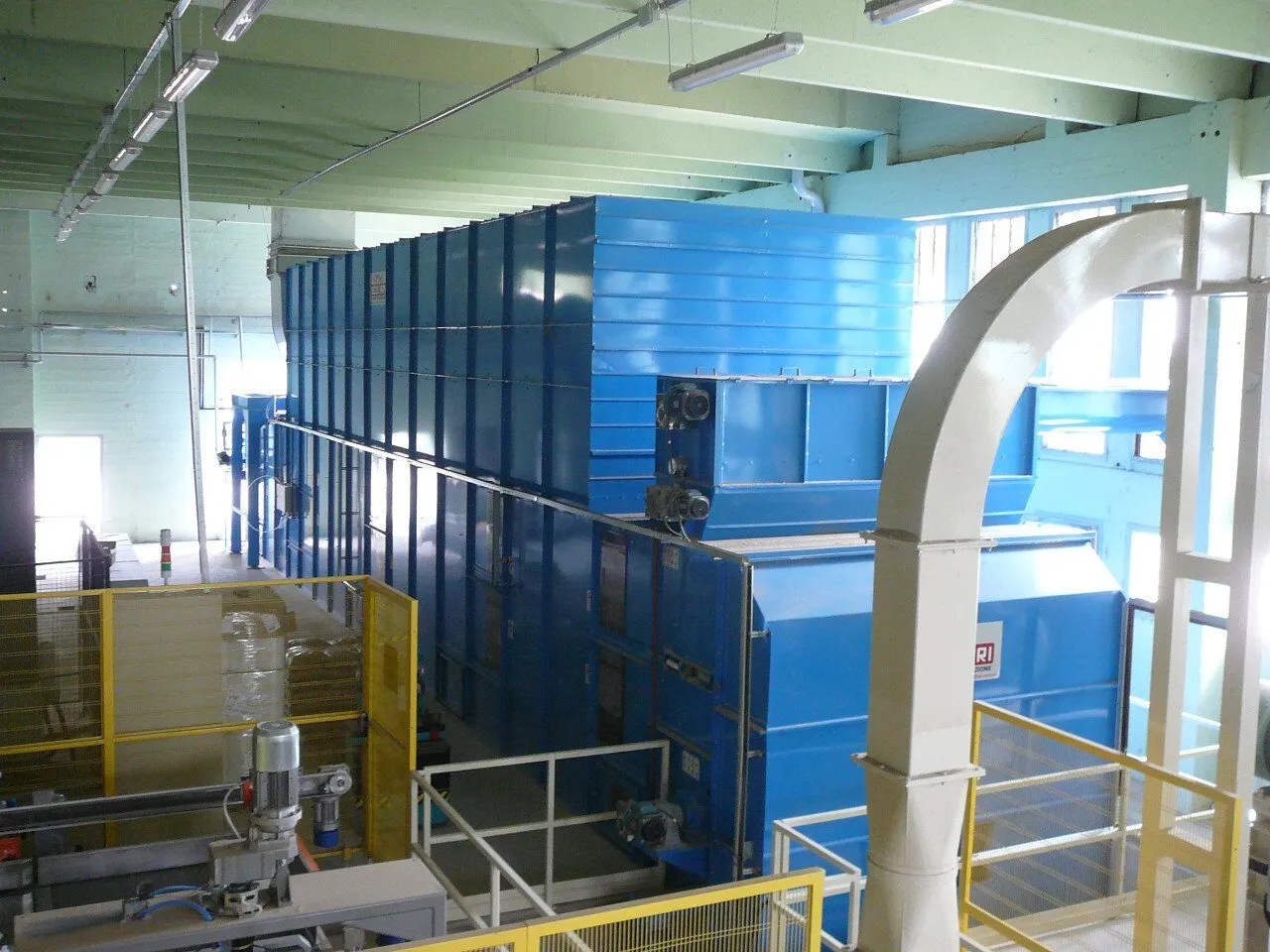
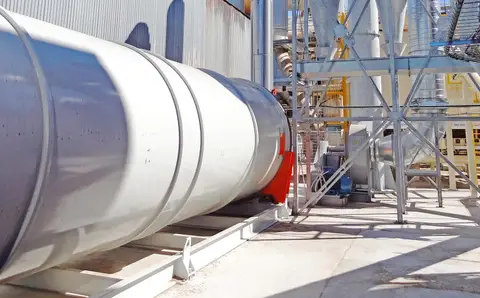
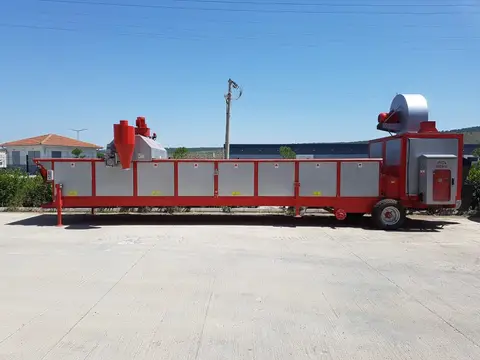
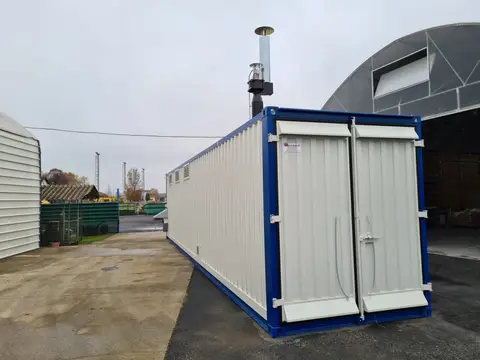
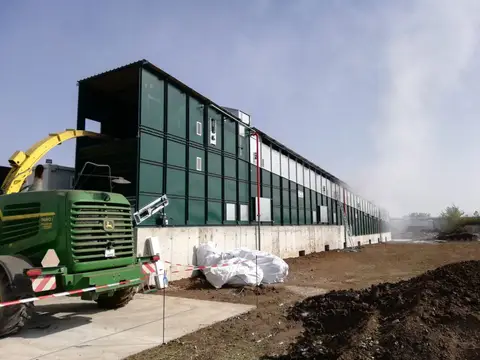
Belt dryers from the Italian maker Scolari (T series) dry the product on a moving perforated belt: it lies still, is not dragged or rubbed, and warm air passes evenly through the layer. Each plant is designed for the product, its moisture and the heat source available.
What is dried
- wood chips, sawdust and shavings — before pelleting and briquetting;
- alfalfa and forage grasses;
- sludge and sewage sludge;
- manure and digestate — to raise dry matter and cut storage volume;
- RDF and SRF, municipal solid waste and the wet organic fraction;
- plastic, paper and board, leather waste;
- eggshell;
- seed.
For grain, Scolari builds SR series tower dryers — they have their own page in the catalogue.
Why a belt beats a chain
In many horizontal dryers a chain drags the product along the bed floor. In the T series it rides on a perforated metal belt, which brings several advantages.
- Gentle handling: the product is not dragged, rubbed or pinched in mechanisms.
- The perforated belt spreads warm air more evenly through the layer.
- Products with difficult physical or chemical properties can be dried.
- The position of the product in the dryer is known exactly, so drying time is controlled.
How the dryer is built
A feed unit lays a layer of set thickness evenly across the full width of the belt. Capacity is set by the area of the drying beds and their number: a plant has one, two or three conveyors. The dryer is low and compact, so it fits easily into an existing building.
Air temperature ranges from 35 to 140 °C, and up to 150 °C in the sludge version. Higher settings are unusual: typical products lose quality. The controls adjust belt speed and residence time to the set initial and final moisture; parameters are shown on a large colour screen. The plants are designed to run up to 24 hours a day and have remote service support.
Materials, fire safety, emissions
- Stainless steel: either only the parts in contact with the product, or the whole dryer — depending on how corrosive the environment is.
- Built-in fire prevention system; a fire-fighting system that sprays water onto the drying bed is optional.
- Dust suppression systems and scrubbers: dust and odour stay within the limits in force in the region.
Heat sources
The dryer is supplied with a heat generator for any fuel: natural gas or LPG, saturated steam, hot water, solid fuel — wood chips, pellets, logs, straw — or thermal oil. The low drying temperature also allows waste heat to be used: hot water from a cogeneration or biogas plant, ORC modules or a solid-fuel boiler.
1T series: one conveyor
A dryer with one drying bed — for products that need a low temperature (35–80 °C) or when a small or medium amount of moisture has to be removed. Hot air passes upwards through the product on a perforated metal belt, after which it is cleaned of dust and discharged with the moisture.
1T-TP is the version for light materials: sawdust, shavings, wood chips, RDF. Its belt is micro-perforated polyester (PET) and the air flows downwards, so the light product is not blown away. The belt is made up to 6 m wide and 30 m long; automatic centring keeps it straight even at large widths. The air is heated by water-to-air heat exchangers in the upper part of the plant.
1T-TPR is the same dryer with heat recirculation: part of the hot air from the end zone, where the product is almost dry, is returned to the process. Less heat is needed per tonne of evaporated water.
2T series: two conveyors
A plant with two belts — for medium and high evaporation capacity. Wet material lands on the upper belt, where it is preheated by air recirculating from the lower one: there the product is already warm and almost dry, so the air leaving it is still hot and dry. At the end of the upper belt the material drops gently onto the lower one, where drying is completed and the product is cooled if required.
| Version | Purpose | Features |
|---|
| 2T-F | sludge and sewage sludge | air at 70–150 °C; outlet moisture below 10%; open cycle or air recirculation |
| 2T-FCR | sludge under strict emission limits | condensation and recirculation of up to 90% of the exhaust air; the remaining 10% at most goes to wet scrubbing |
| 2T-AS | solid fraction of digestate | heat from hot water or flue gases of a cogeneration unit; a two-stage scrubber captures dust and over 90% of the nitrogen as ammonium sulphate |
| 2T-ASLQ | solid and liquid fractions of digestate | part of the dry product is returned to the inlet and mixed with the liquid fraction so that air can pass through the layer; scrubber producing ammonium sulphate |
Dried digestate is spread on the field or supplied to makers of organic fertiliser. During drying the material heats up and is sanitised, so it is also used as livestock bedding.
When another dryer is the better choice
For very wet and liquid products, products with surface moisture, large round produce and jobs that demand especially uniform final moisture, other Scolari horizontal dryers are a better fit: vibrating, static or with mechanical turning.
Tell us what you dry, the initial and target moisture, the capacity and the heat available on site — we will select the series and the version.