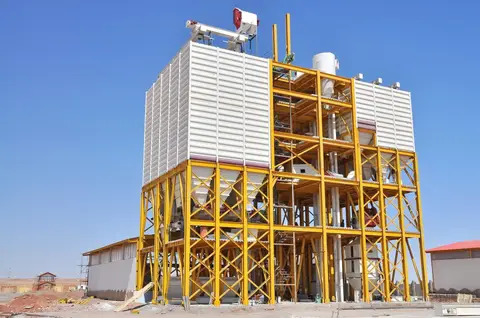
Feedtech feed mills
Feed mills are the core business of Feedtech. The company builds both turnkey mills and any of their individual elements: hammer mills, mixers, pelleting lines and dosing units.
Price on request Details →
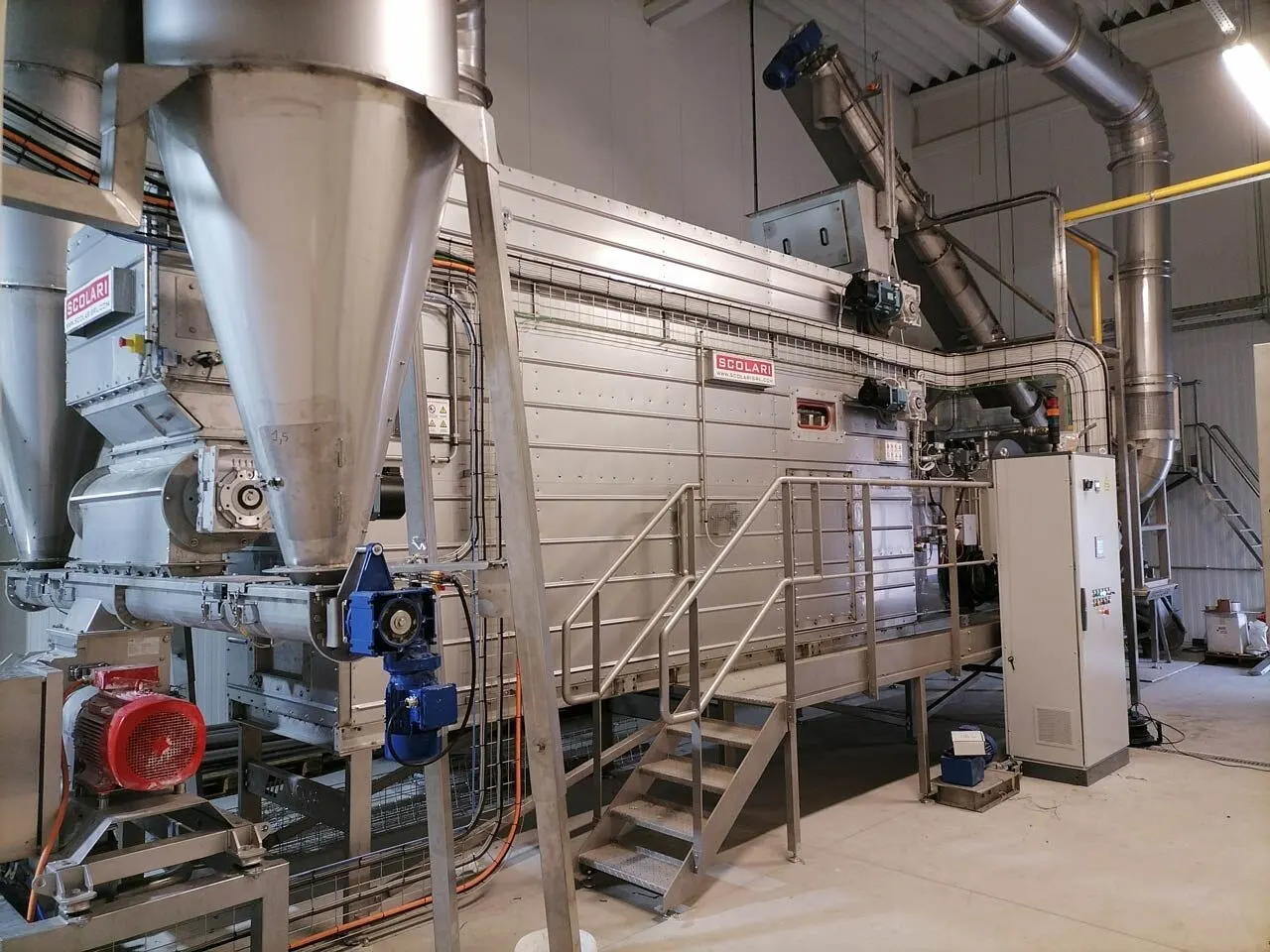
Scolari TC series toasters — continuous roasting and cooling lines for soya, cereals, lupin, peas and nuts: 3–20 t/h, air at 150–280 °C, heat recovery.
TC series toasters from the Italian maker Scolari are industrial continuous roasting lines. A dryer only lowers moisture, while a toaster heat-treats the product: raw soya leaves it as a complete high-protein, high-energy feed. Each line is designed for a specific product and capacity.
| Type | continuous roasting and cooling line |
| Capacity | about 3–20 t/h, according to Scolari |
| Process air temperature | about 150–280 °C |
| Heat source | line burners on natural gas or LPG |
| Air | heat recovery and partial recycling; dust is captured by cyclones |
| Casing | insulated side walls; stainless steel version optional |
| Control | PLC cabinet and operator panel |
| Standards | CE, ATEX, dust emission requirements |
Soya combines high-quality protein (about 36–42%) with its own oil (18–22%), so roasted full-fat soya is both a protein and an energy feed. But raw soya contains anti-nutritional substances: they hinder digestion and, in pigs, poultry and young stock, directly reduce weight gain.
The main obstacle is trypsin inhibitors: they block the enzyme that breaks protein down into amino acids. Researchers recommend reducing their activity by at least 90%. Lipoxygenase, which heating also inactivates, causes rancidity of the oil and a “beany” taste — so roasted soya also keeps better.
Roasting has a narrow window, and it can be missed on either side.
| Control index | Guide value for well-roasted soya | What it shows |
|---|---|---|
| Urease activity, ΔpH | 0.05–0.20; lower for young stock | under-heating (a high value means raw soya); does not detect over-heating |
| Protein solubility in KOH, % | 73–85; about 100 for raw soya | both under-heating (above 85) and over-heating (below 72) |
| Protein dispersibility index PDI, % | 15–45 for full-fat soya | degree of processing; below 15 suggests over-heating |
| Trypsin inhibitor activity | reduced by at least 90% | a direct measure of the anti-nutritional factor |
The window has to be hit in every batch and evenly across the whole flow. The design of the toaster provides this: even heating and a controlled residence time. The values in the table are generally accepted guide figures; the settings for your product are found during commissioning and checked in a laboratory.
For free-flowing and granular products Scolari has another technology as well — LFV series vibrating fluid-bed plants. They are dryers first of all, but are also used to roast soya, hazelnuts and almonds.
| Criterion | Drying soya | Roasting soya |
|---|---|---|
| Task | lower moisture to a level safe for storage | inactivate anti-nutritional substances and raise feed value |
| Mode | gentle, especially for seed and food-grade soya | hot, but within an exact temperature and time window |
| Equipment | grain dryer | TC series toaster |
| Result | dry soya for storage and sale | ready high-protein feed |
Feed mills are the core business of Feedtech. The company builds both turnkey mills and any of their individual elements: hammer mills, mixers, pelleting lines and dosing units.
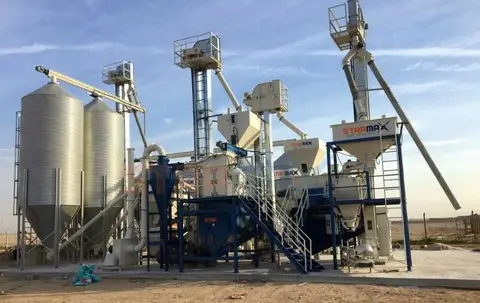
Stationary mills from the Turkish manufacturer Starmax produce pelleted feed, crumbles and mash, from tipping raw material out of a lorry to bagging and bulk loading. One mill makes both mash and pellets: a diverter…
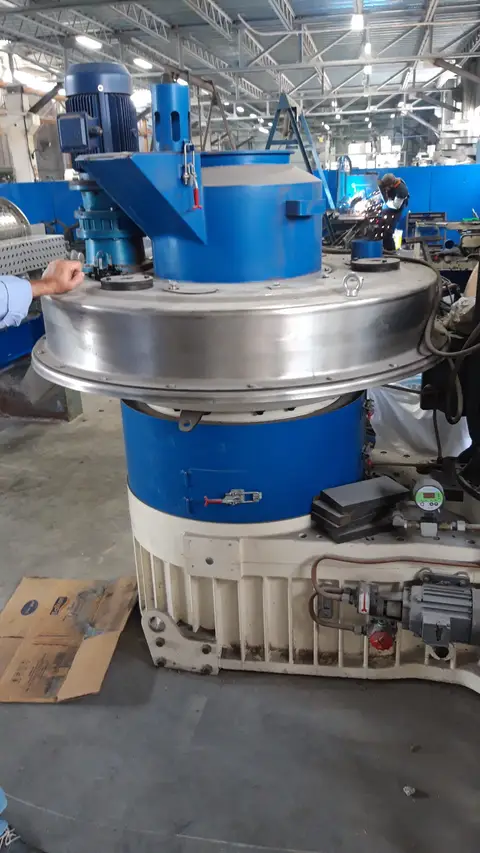
Starmax pelleting lines do two jobs: they make fuel pellets from sawdust, wood chips, straw and husk, and feed pellets from lucerne, grass and bran. A line comprises size reduction, drying, fine milling, pressing…
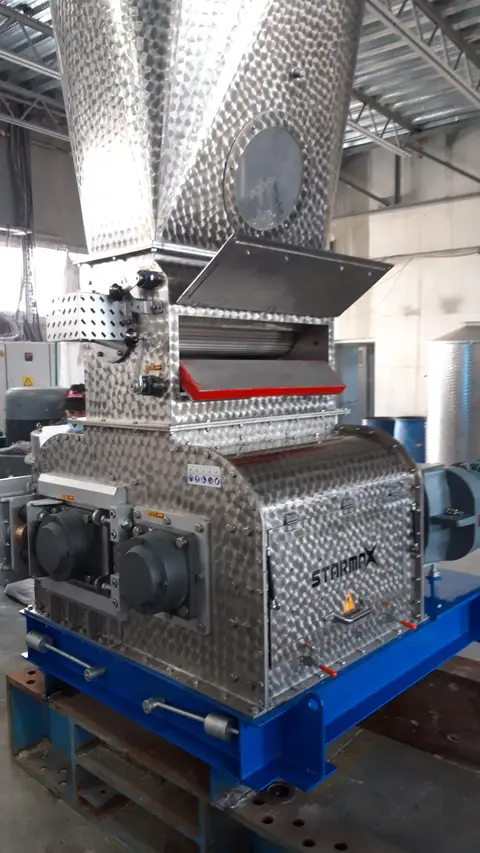
Steam flaking turns grain into feed flakes. The grain is steamed in a tower, flaked between two hardened rollers, then dried and cooled in a tunnel. Steamed flakes have more digestible starch, and there is noticeably…
Describe your task — we will select the machinery and calculate the price and delivery time.
+38 (066) 354-00-04 Mon–Fri 9:00–18:00