Berries 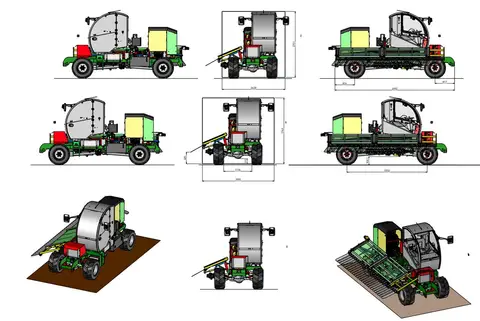
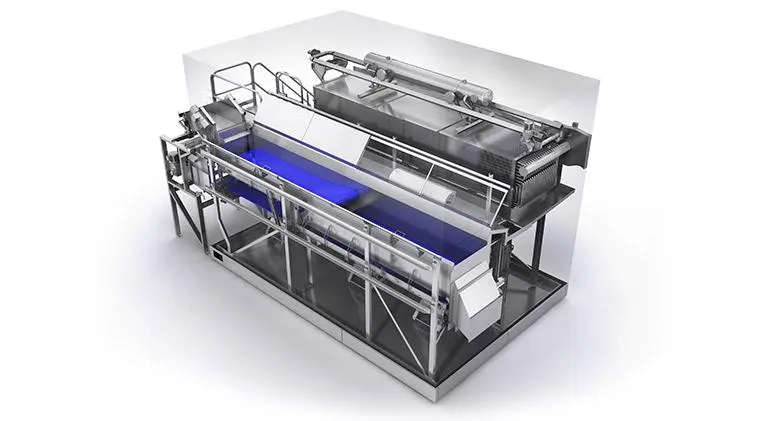
Shock freezing of products.
Quick freezers
Three temperature ranges at the centre of the product can be distinguished during freezing: from +20 to 0 °C, from 0 to −5 °C and from −5 to −18 °C.
In the first stage the product is cooled from +20 to 0 °C, and its temperature falls in proportion to the heat removed. In the second stage, from 0 to −5 °C, the liquid phase turns solid: a great deal of heat is removed, but the temperature hardly falls while about 70% of the liquid in the product crystallises. In the third stage the product is frozen down from −5 to −18 °C, and the temperature again falls in proportion to the work done by the refrigeration unit. Traditional freezing in low-temperature cold rooms assumes a room temperature of −18 to −24 °C and a freezing time of 2.5 hours or more. In freezing, the speed of the process is decisive: product quality is closely linked to the freezing rate. Numerous experiments show that the freezing rate affects the size of ice crystals and the structural and enzymatic changes in products. The idea of quick (shock) freezing is to speed up cooling, crystallisation and final freezing. This is achieved in two ways: lowering the air temperature to −30…−35 °C, and moving the air faster by blowing it through the evaporator and intensively over the product. Lowering the temperature further leads to unjustified power consumption and greater deformation of the product.
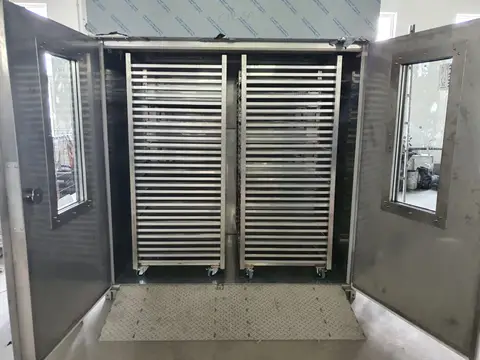
Compared with traditional freezing on racks in cold rooms, quick freezers offer the following advantages: product losses are 2–3 times lower; freezing time is 3–10 times shorter; production floor space is 1.5–2 times smaller; production staff is reduced by 25–30%; the payback period is 15–20% shorter.
A practical example: with traditional technology the total freezing time for dumplings and cutlets is 2.5 hours, while with quick freezing it is 20–35 minutes. The second stage shortens from 1 hour to 15 minutes.
The high cooling rate provided by −30…−35 °C in the chamber and intensive air flow takes the product quickly through the transition from liquid to solid. The ice crystals formed are much smaller and form almost simultaneously in the cells and between them, so the cells remain undamaged. As a result, the tissue structure of the fresh product is preserved almost unchanged — better than with other preservation methods.
The absence of any thermal or chemical treatment (apart from blanching and ascorbic acid treatment, required by the technology for some vegetables and fruit) means that quick freezing does not affect the purity or biochemistry of the product.
The speed of freezing shortens the periods in which bacteria are active. Different types of bacteria have different temperature ranges of activity, including below 0 °C. With slow freezing, traces of the activity of each type appear and remain in the product; with quick freezing, many types have no time to develop.
Weight loss through evaporation during freezing is up to 5–10% in a conventional regime (depending on the chamber temperature and the product). Quick freezing reduces weight loss to 0.8%, which also gives a significant economic effect.
Because drying is prevented, aromatic and nutritional substances do not have time to leave the product. Nutritional value and taste remain unchanged.
Quick-frozen products keep longer than products frozen in conventional chambers and retain their qualities better during long storage.
Quick-frozen products, semi-finished products and ready meals are popular all over the world. The range of products preserved by quick freezing is extremely wide: fruit, berries, vegetables, melons, herbs and mixes of them; ready first and second courses, pies and bakery products; semi-finished meat and fish products such as steaks, burgers, cutlets, sticks, sausages and dumplings; desserts, juices, puddings, jellies and ice cream. The appeal of quick-frozen products is clear: the product is almost entirely free of inedible parts; it hardly differs from fresh and keeps its natural properties; it is packed and portioned; it needs no attention in storage and is always ready to use; and it takes minimal time and effort to prepare. Quick freezing makes it possible to sell agricultural produce later and in another place — a kind of transport from summer to winter and from field to table. A farm can freeze part of its produce and sell it directly to the consumer at a higher price than fresh, anywhere and at any time.
It follows that the advantages of quick freezing allow a reasonable investment in the equipment to pay back fairly quickly. Quick freezing is also becoming a standard for producers and buyers of frozen products.
Fluidised-bed quick freezers are designed mainly for freezing small or diced fruit and vegetables: fruit (plums, peaches, apricots), berries (strawberries, currants, cranberries, blueberries), vegetable mixes (beet, carrots, courgettes, sweet peppers, cabbage) and French fries. Mushrooms (whole or sliced), small fish and shrimp can also be frozen. This class of freezer gives the highest freezing rate among air-blast freezers and minimal drying, and preserves high product quality. After freezing the product keeps its free-flowing structure and packs perfectly.
The freezers are offered in a range of capacities: from half a tonne per hour to several dozen tonnes per hour.
A video showing the freezer at work is available.
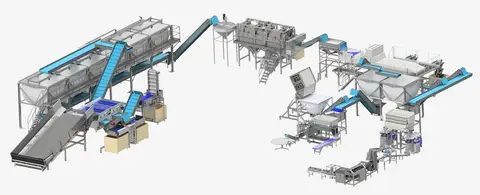
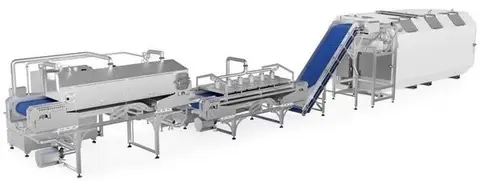
Describe your task — we will select the machinery and calculate the price and delivery time.
+38 (066) 354-00-04 Mon–Fri 9:00–18:00