Wheat / Cereals 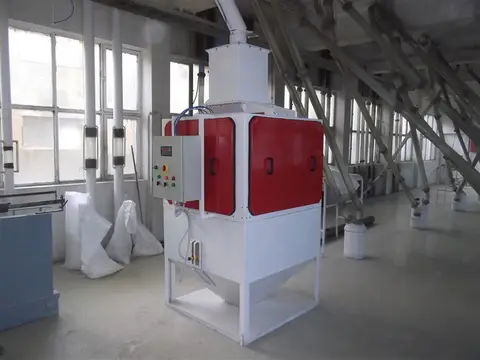
Electronic scales for weighing grain in the flow
Price on request →
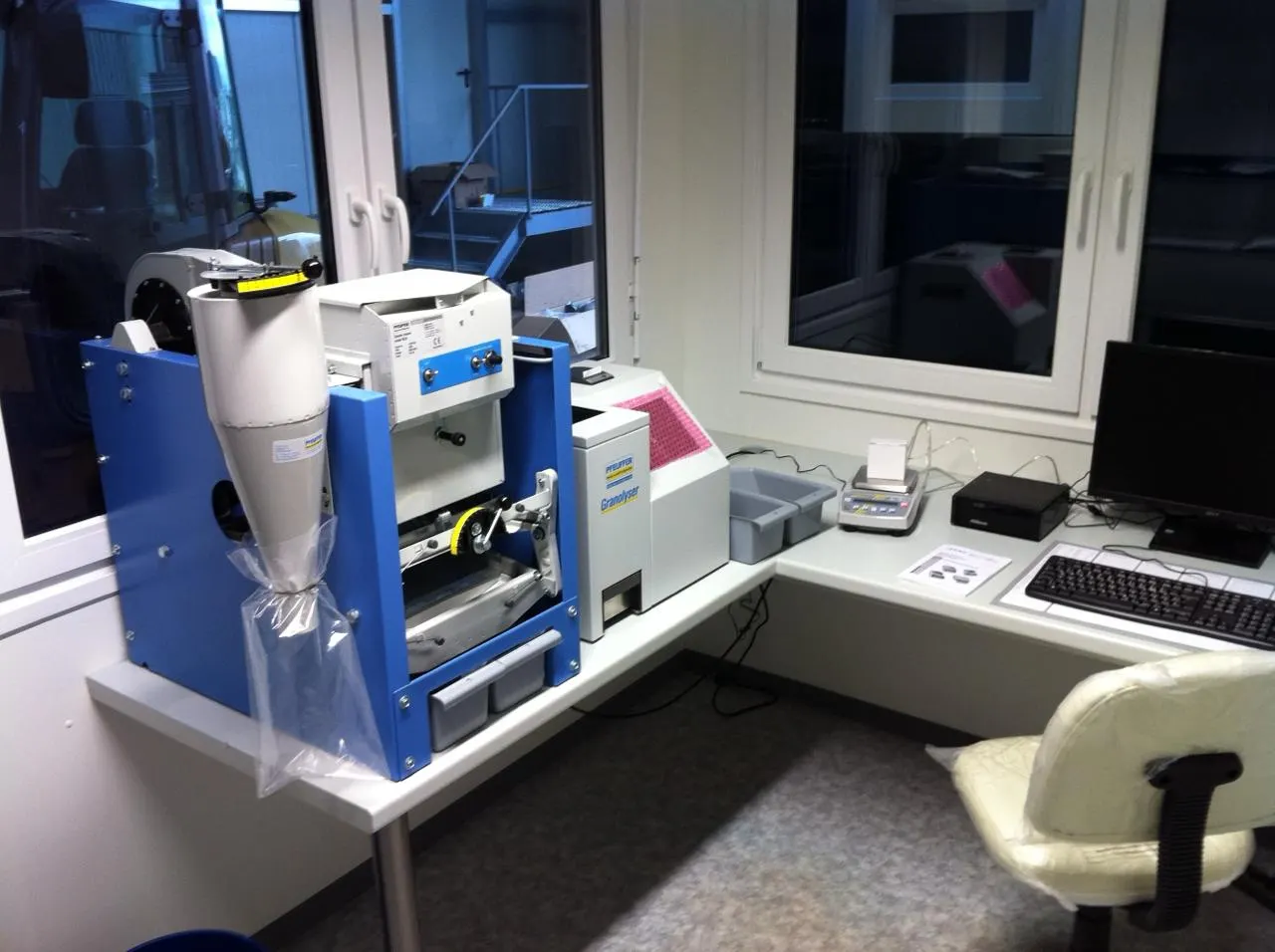
For determining the quality of cereal and oilseed crops.
In a highly competitive market, growers have to pay more attention to the quality of their produce and need laboratory tests that check and confirm it. A modular laboratory makes testing more accessible in areas such as the safety and quality of grain and grain products, the quality of seed of cereal, oilseed and fodder crops, and the safety and quality of feed for farm animals.
All instruments are supplied from Germany as a set that allows full operation in line with national and international standards; instructions and measurement methods are included.
The instrument stands out for high accuracy and fast analysis. This makes it ideal for grain intake points and elevators, grain traders, flour mills, maltings and oilseed processors.
Features and advantages:
The instrument scans the sample 100 times in 40 seconds and averages the results to give an extremely accurate, repeatable and representative result in a short time.
A built-in modem and network support in the instrument menu make it a grain analyser that is fully ready for network connection.
An optional attachable test weight module reduces the workload and speeds up sample flow when measuring test weight and NIR parameters.
Ready-to-use calibrations are offered for a wide range of cereals and oilseeds of any geographical origin, including high-moisture samples. Reflectance spectroscopy ensures accurate results.
The instrument complies with many international standards and recommendations such as AACC 39-25 and OIML R 59 and is officially approved for moisture analysis in several countries, including Germany.
The instrument uses a new, advanced standardisation method. It ensures that all units give the same results for the same samples, whatever the temperature (ambient, sample or internal).
| PINS | software for networking several instruments. |
| PICS | software for communicating with a PC and creating new calibrations. |
| Test weight module | an attachable module for measuring the test weight of grain. |
Models: MLN and SLN
These machines are ideal for laboratories or grain intake points where a cleaned grain sample from a large batch is needed. After cleaning, the sample can be used for more accurate analysis (moisture, test weight and so on). The machine can also be used to test samples of cereals and pulses for impurities.
The base of the de-awner is closed and a pre-weighed sample is poured in. The lid is closed and the machine is started with the start button. Within 60 seconds the de-awner empties automatically, tipping the sample onto the sieves. Light waste is lifted by the air cyclone and carried into a plastic bag. The grain reaches the top sieve and falls through it, while large impurities stay on top. The grain then passes over the second sieve; sand and other fine impurities fall through. Good cleaned grain goes into the right-hand tray, sand and other fine impurities into the left-hand tray. Once the sample has passed over the sieves, the machine can be stopped by opening the lid.
A. The slide at the bottom of the intake hopper is closed. A pre-weighed grain sample is poured into the hopper;
B. The hopper lid is closed and the machine is started. After 20–60 seconds (at the operator’s discretion) the slide at the bottom of the hopper opens and the sample falls onto the top sieve;
C. Light impurities are lifted and carried away by the air cyclone and settle in a plastic bag;
D. The grain falls through the openings of the top sieve, while large foreign material moves over the sieve surface to the rear of the hopper;
E. On the bottom sieve, by contrast, the grain is carried over the surface to the rear wall, while sand and small seeds fall through the openings;
F. The required grain is returned to the lower grading sieve;
G. High-grade grain goes into the right-hand box;
H. Undersized (small) grain goes into a separate box;
I. Sand and small seeds go into a third collecting box.
Steps A–E are the same as for the SLN.
F. Well-cleaned grain goes into the right-hand box;
G. Sand and small seeds go into the left-hand box.
Basic settings (top sieve / bottom sieve / cyclone air setting / crop outlet setting):
| Cereals | 4.5 x 20 / 1.5 x 3.5 + 2.0 ● / 7–10 / 4–6 |
| Spring rapeseed | 2.8 (3.0) ● / 1.0 x 20 / 5 / 1 |
| Winter rapeseed | 3.0 ● / 1.0 (1.25) x 20 / 6 / 1–2 |
| Flax | 1.8 (2.2) x 20 / 1.8 (2.0) ● / 3–5 / 1–2 |
| Maize | 11.0 (12.0) ● / 4.5 ● / 15 / 10–12 |
| Peas | 9.0 (10.0) ● / 3.0 (3.5) ● / 15 / 8–10 |
| Beans | 11.0 (13.0) ● / 3.5 x 20 / 15 / 10–12 |
| Sunflower | 10.0 (12.0) ● / 2.0 (2.5) x 20 / 7–9 / 8–10 |
| Dimensions (W x H x D) | 780 x 420 x 670 mm / 1,090 x 420 x 670 mm |
| Dimensions with cyclone (W x H x D) | 620 x 570 x 680 mm / 910 x 570 x 680 mm |
| Sample load | 1 kg / 1 kg |
| Weight | 55 kg / 85 kg |
| Power supply | 220 V / 220 V |
| Plastic trays in the standard set | 4 / 5 |
| Mains lead in the standard set | 2 m / 2 m |
| Grain sieves in the standard set | 2 / 3 |
| Additional equipment | electronic scales with memory and percentage weight calculation; sieve plates (both models) |
The oval sampling openings of the spear open from the bottom end and then step by step up to the top. This ensures that the portions of the sample taken from the lower and upper levels of the grain layer are in proportion.
Length 1.45 m, diameter 38 mm;
| Material | duralumin |
| Capacity | 500 g (dry wheat grain) |
| Weight | 1.4 kg |
Sampling openings along almost the whole length of the spear (1 m).
Length 2.0 and 3.0 m, diameter 38 mm;
| Material | duralumin |
| Capacity | 500 g (dry wheat grain) |
| Weight | 2 and 2.5 kg respectively |
Sampling openings only along the bottom metre (a sample is first taken at a depth of one metre, then grain is taken from deeper layers).
Length 1.3 m, diameter 50 mm;
| Material | duralumin |
| Weight | 1.8 kg. |
Describe your task — we will select the machinery and calculate the price and delivery time.
+38 (066) 354-00-04 Mon–Fri 9:00–18:00